Directorio Legislativo brings a Latin American voice to global democracy talks in Brussels and New York
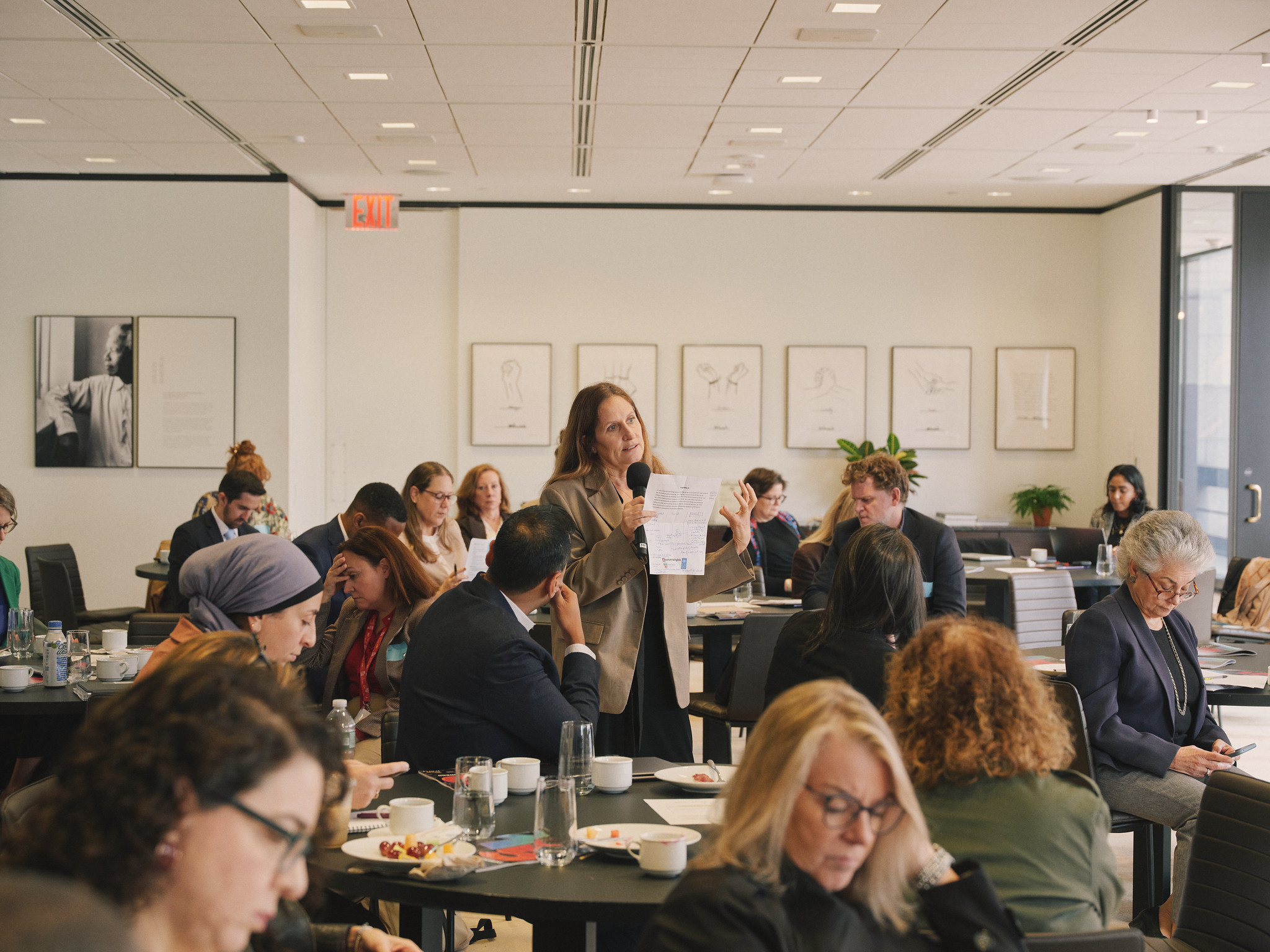
Directorio Legislativo’s Global Executive Director, María Baron, spent part of September in Brussels and New York, bringing a Latin American perspective to international conversations on the future of democracy around the International Day of Democracy and the 81st UN General Assembly.
From September 14 to 18, Baron was in Brussels for a dialogue on the future of democracy co-hosted by the United Nations Development Programme (UNDP) and the City of Brussels. The dialogue brought together representatives from government, parliament, civil society, academia, youth-led movements, and international organizations to share experiences and explore how promising democratic innovations can move beyond one-off experiments and become lasting institutional practices.
That same week, she also took part in consultations led by the Inter-Parliamentary Union (IPU) and UNDP for the upcoming Global Parliamentary Report, which will focus on fostering dialogue and building consensus in parliaments.
“Forums like these are key to making sure Latin America’s perspective is part of the global conversation on the state of democracy. Our region has a lot to offer when it comes to innovation and openness, but it also has unfinished business that needs to be put on the table if we want more transparent institutions that truly serve their citizens,” said Baron.
Open government and civil society on the UN agenda
In New York, during the General Assembly’s high-level week, Baron spoke at an event hosted by the Open Government Partnership (OGP), where she presented Directorio Legislativo’s work to update the Latin American standards for lobbying regulation, first developed in 2016 with partner organizations across the region.
On September 23, she also joined the high-level roundtable celebrating OGP’s 15th anniversary. Hosted at the Ford Foundation Center for Social Justice and moderated by former New Zealand Prime Minister Helen Clark, the event gathered heads of state and government from nearly 10 countries, along with ministers and civil society leaders, and opened with messages from leaders of Albania, Armenia, Costa Rica, the Dominican Republic, Ghana, Guatemala, and the Philippines. Fifteen years after OGP was launched at the United Nations, the roundtable was a chance to take stock of its progress and pinpoint where greater ambition, collaboration, and political leadership will be needed to advance open government in the years ahead.
Baron wrapped up her agenda at the Ban Ki-moon Foundation, joining a discussion on the future of civil society: how organizations can stay afloat and remain relevant in an increasingly challenging global landscape.